
Blue Light - what is the fuss
Blue light has received a lot of attention in recent years, particularly as we spend more time using computers, smartphones, tablets and other digital devices. This has led to concerns that blue light from screens could damage our eyes and to the growing popularity of blue-light-filtering glasses and contact lenses.
But how much of this concern is supported by evidence?
The sun is by far our most significant natural source of blue light. Digital screens and LED lighting also emit blue light, but at much lower levels. Current evidence does not show that the blue light produced by everyday digital screens causes permanent damage to the eyes.
What prolonged screen use can cause is temporary eye discomfort, commonly referred to as digital eye strain.
Our Optometrist's Advice
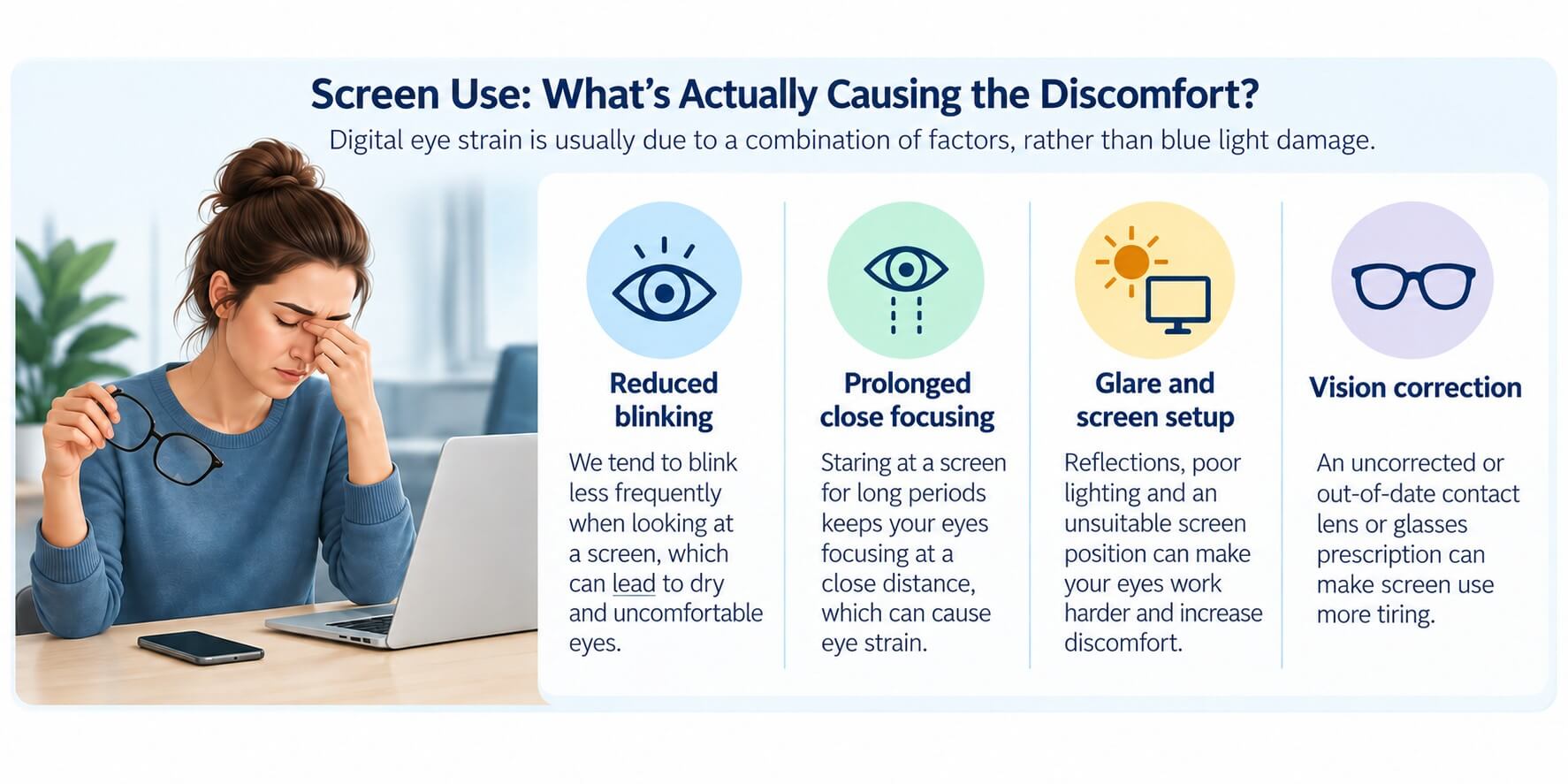
“Blue light from everyday digital screens has not been shown to damage the eyes. If your eyes feel tired, dry or uncomfortable after long periods of screen use, the more likely causes are reduced blinking, prolonged close focusing, glare or an uncorrected vision problem.
Rather than concentrating on blocking blue light, focus on comfortable screen habits and have your eyes examined if symptoms persist.”
John Dreyer BSc (Hons), MCOptom, DipCL
Optometrist & Clinical Content Reviewer
Does Blue Light From Digital Screens Damage Your Eyes?
There is currently no good evidence that normal exposure to blue light from computers, phones or tablets damages the retina or increases the risk of eye diseases such as age-related macular degeneration (AMD).
Laboratory studies have shown that very intense blue light can damage cells under experimental conditions, but these studies do not reproduce the amount or type of exposure our eyes receive from everyday digital devices.
This is an important distinction. Blue light itself isn't something that screen users generally need to protect their eyes against.
Why Do My Eyes Feel Tired After Using a Screen?
The discomfort many people experience after spending several hours at a computer is usually associated with digital eye strain rather than blue-light damage.
When concentrating on a screen, we may blink less frequently. Prolonged close focusing, glare, screen position and an unsuitable glasses prescription can also contribute to tired, dry or uncomfortable eyes and temporary blurred vision.
Simple changes can help. Take regular breaks from close work, remember to blink fully, position your screen comfortably and reduce distracting glare.
The 20-20-20 rule can be a useful reminder: approximately every 20 minutes, look at something at least 20 feet away for around 20 seconds.
If your symptoms are persistent, an eye examination can help determine whether dry eye, an uncorrected prescription or another eye problem may be contributing.
Can Blue Light Affect Sleep?
This is where blue light becomes more relevant.
Light plays an important role in regulating our circadian rhythm, the body's natural sleep-wake cycle. Blue light during daylight hours contributes to alertness, but exposure to light from screens late in the evening can interfere with the signals that help prepare the body for sleep.
If evening screen use appears to affect your sleep, reducing screen time before bed may help. Using your device's night or dark mode and lowering screen brightness in the evening are also reasonable measures.
This is primarily about sleep and circadian rhythm, rather than preventing damage to the eyes.
Do Blue-Light-Filtering Glasses Work?
Blue-light-filtering spectacle lenses are designed to reduce the amount of blue-violet light reaching the eyes. However, this doesn't necessarily mean they provide a health benefit.
Current evidence does not support blue-blocking spectacle lenses for the general population as a reliable way to improve visual performance, relieve eye fatigue, improve sleep quality or protect macular health.
Some people may still prefer blue-filtering lenses for personal comfort or appearance, but they should not be presented as necessary protection against damage caused by digital screens.
Do You Need Blue-Light Glasses for Computer Work?
For most people, special blue-light-blocking glasses are not necessary simply because they use computers or other digital devices.
If you already wear prescription glasses, making sure the prescription is appropriate for your working distance may be more important than whether the lenses contain a blue-light filter.
If you regularly experience headaches, blurred vision or uncomfortable eyes while working at a screen, speak to your optometrist rather than assuming blue light is the cause.
Do Contact Lenses Filter Blue Light?
Some modern contact lenses incorporate technology that filters a proportion of blue-violet light, although this is not a feature of all contact lenses.
For example, ACUVUE OASYS MAX 1-Day incorporates an OptiBlue™ Light Filter that the manufacturer states filters approximately 60% of blue-violet light. The lens also contains separate Class 1 UV-blocking technology.
However, filtering blue-violet light with a contact lens has not been shown to provide health benefits such as retinal protection, protection against cataract progression, reduced eye strain or improved circadian rhythm.
The presence of a blue-violet light filter should therefore be considered one feature of the lens rather than a reason everyone needs to wear it.
UV-blocking contact lenses also do not replace UV-blocking sunglasses because contact lenses do not cover the entire eye and surrounding area.
What's the Difference Between Blue Light and UV Light?
Blue light and ultraviolet (UV) radiation are not the same thing.
There is established evidence that excessive exposure to UV radiation from sunlight can contribute to eye disease. Appropriate sunglasses that provide UVA and UVB protection therefore remain an important part of protecting your eyes outdoors.
That should not be confused with claims about blue light from computer screens, where current evidence does not demonstrate comparable eye damage.
How Can I Make Screen Use More Comfortable?
- Take regular breaks from prolonged near work and try the 20-20-20 rule.
- Blink regularly, particularly if your eyes tend to become dry.
- Position your screen at a comfortable distance and height.
- Adjust text size, brightness and glare rather than straining to see the display.
- Make sure your glasses or contact lens prescription is up to date.
- Reduce screen exposure before bedtime if you find it interferes with your sleep.
If dry eyes, headaches, blurred vision or eye discomfort continue despite these changes, arrange an eye examination.
The Bottom Line
Blue light is a normal part of visible light, and our greatest exposure comes from the sun. Although digital devices also emit blue light, current evidence does not show that normal screen use causes permanent eye damage through blue-light exposure.
Long periods of screen use can certainly leave your eyes feeling tired, dry or uncomfortable, but this is more appropriately addressed as digital eye strain rather than blue-light damage.
Blue-light-filtering glasses and contact lenses are available, but they should not be promoted as essential protection against eye disease. If screen use is causing persistent symptoms, your optometrist can assess your vision, tear film and eye health and advise whether changes to your prescription, working environment or eye-care routine could help.