Top 10 Contact Lens Questions Answered
At contactlenses.co.uk, we want you to feel confident and comfortable with your contact lenses. We know everyone has questions, whether you are new to wearing contact lenses or a pro. We've answered thousands of customer enquiries over the years. These are the most common contact lens questions our optometrists are asked, covering everything from sleeping in lenses and swimming with contact lenses to costs, dry eyes and astigmatism.
In this article Mr J Dreyer (BSc (Hons), MCOptom DipCLP), answers the most common questions about contact lens safety, comfort, wear time, costs and eye health.
Important Note: The information is for general guidance only, based on manufacturer data and industry standards. It is not a replacement for personalised advice. We always recommend speaking with your own optician or eye care professional for recommendations specific to your eyes and eye care needs.
Top 10 Contact Lens Questions
Here are our 10 most frequently asked questions.
- Can I sleep in my contact lenses?
- How long can I wear contact lenses each day?
- How do I put in and take out contact lenses?
- What’s the difference between daily, bi-weekly, and monthly contact lenses?
- Can I wear contact lenses if I have astigmatism or dry eyes?
- Is it safe to swim or shower with contact lenses?
- How often should I replace my contact lenses?
- Why do my contacts feel uncomfortable, dry, or blurry by the end of the day?
- Are contact lenses bad for your eyes in the long term?
- How much do contact lenses cost compared to glasses?
They are not in order of popularity, so let's just jump in
Can I sleep in my contact lenses?
Generally, the answer is no, and our optometrist doesn't recommend it. Sleeping in lenses (even for one night) increases the risk of eye infections quite significantly.
Only a few specially approved extended-wear lenses are designed for overnight use. One popular option is Biofinity by CooperVision, which is approved for up to 6 nights and 7 days of continuous wear (when recommended by your optician). However, even with these lenses, many eye care professionals still advise removing them nightly for better long-term eye health.
If you want the safest and most convenient option, daily disposable lenses are usually the best choice.
How long can I wear contact lenses each day?
Most people can comfortably wear contact lenses for 12 to 16 hours a day. This can vary depending on the type of lens, your eyes, and your lifestyle. New wearers should start with fewer hours and gradually build up their wear time. If your eyes start feeling dry or tired before the end of the day, it’s best to take your contact lenses out earlier. Lenses made from silicone hydrogel, such as Precision7 tend to perform better for longer wearing times thanks to their advanced moisture technology.
How do I put in and take out contact lenses?
It can feel tricky at first, but it quickly becomes second nature.
To insert contact lenses: Wash and dry your hands, place the lens on your fingertip (make sure it’s the right way up), look straight ahead or slightly down, gently pull down your lower lid and place the lens in the centre of your eye. Blink a few times to help it settle.
To remove contact lenses: Wash your hands, look up, pull down your lower lid, and gently pinch the lens off with your thumb and forefinger.
We have helpful video guides on insertion and removal of contact lenses, and your optician can also show you in person during your fitting.
What’s the difference between daily, two-weekly, and monthly contact lenses?
Each type of contact lens has its benefits, the best one for you will depend on factors such as your lifestyle, eye health, and budget. Always discuss the options available to you with your optometrist, who will advise the best lens for you.
Daily disposables: Fresh pair every morning. Most hygienic and convenient, great for dry eyes or busy lifestyles, but more expensive.
Two-weekly: Replaced every two weeks. A good middle ground between convenience and cost.
Monthly: Most affordable option, but you need to clean them carefully every day. Comfort can sometimes drop off towards the end of the month.
Many of our customers find weekly lenses like Precision7 offer an excellent balance between comfort and value.
| Type | Key Points | Wear times | Cost |
| Daily | Most Hygienic, most convenient, great for dry eyes | Fresh pair each day | £££ |
| Two Weekly | Need to be cleaned and stored every night. A good middle ground between cost and convenience | Replace every 2 weeks | ££ |
| Monthly | Need to be cleaned and stored every night. Comfort can decline towards the end of the month | Replace every 30 days | £ |
Can I wear contact lenses if I have astigmatism?
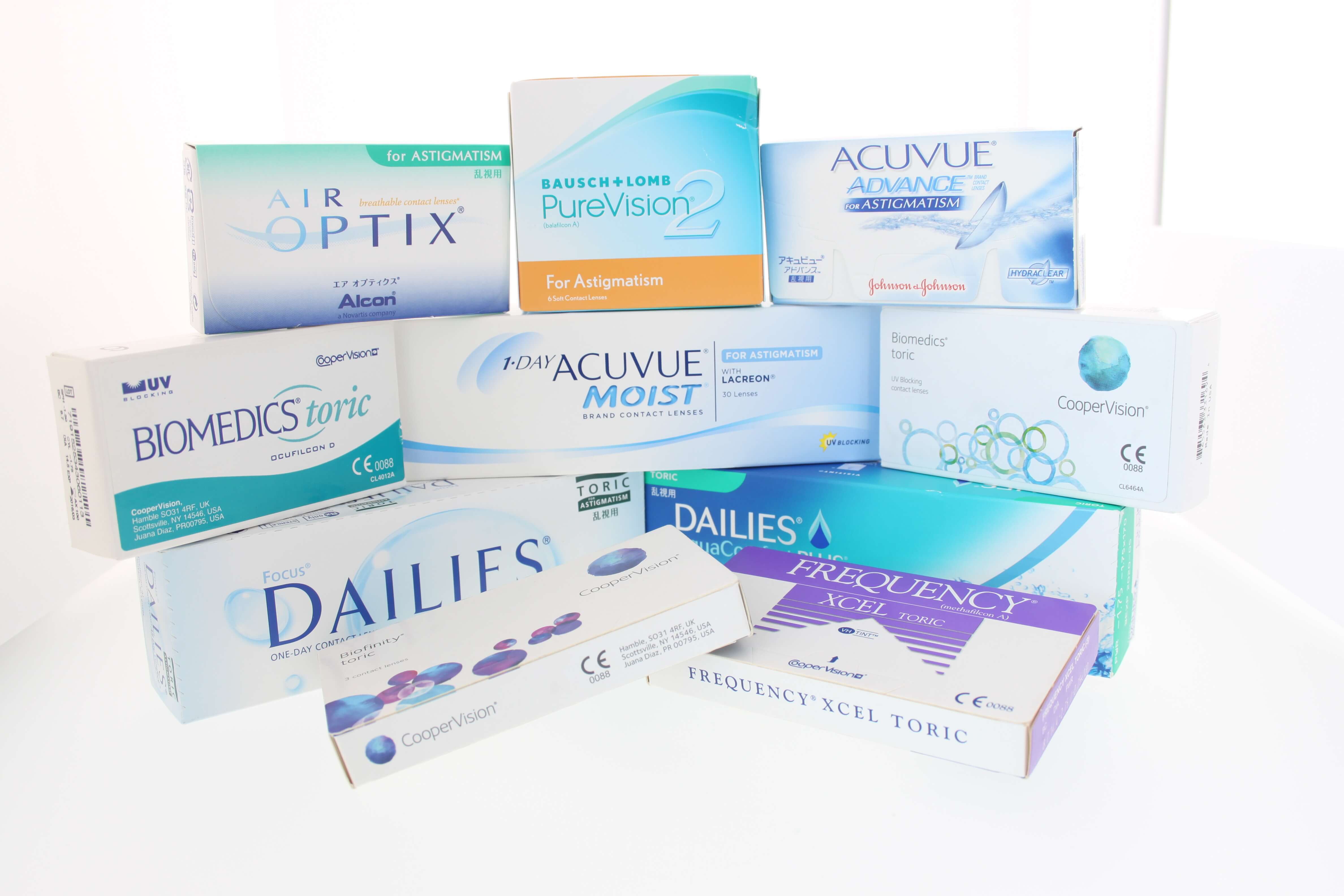
Yes, absolutely. Modern contact lenses can correct most types of astigmatism very effectively. Specially designed toric contact lenses are engineered to remain stable on the eye, providing clear, consistent vision throughout the day. Popular options include Precision7 for Astigmatism, Biofinity Toric, and Acuvue Oasys for Astigmatism. Your optician will measure your prescription and recommend the most suitable lens for your eyes and lifestyle. Most people with astigmatism can enjoy the same comfort, convenience, and freedom from glasses as regular contact lens wearers.
What are the best contact lenses for dry eyes?
The best contact lenses for dry eyes are usually those made from breathable silicone hydrogel materials or daily disposable lenses that provide a fresh, clean lens every day. Popular options include Dailies Total1, MyDay, Precision1 Daily, and Biofinity. These lenses are designed to retain moisture and allow high levels of oxygen to reach the eye, helping to improve comfort throughout the day. If your eyes regularly feel dry, gritty, or tired when wearing contact lenses, your optician may recommend a different lens material, wearing schedule, or lubricating eye drops.
Is it safe to swim or shower with contact lenses?
No, it’s not safe to swim in contact lenses. Water (from pools, showers, the sea, or even tap water) can contain bacteria and microorganisms that stick to your lenses and cause serious eye infections. Always remove your contact lenses before any water activity. Prescription swimming goggles are a great alternative if you need vision correction in the water.
Our optometrists advice if you do wear your contact lenses in the water, you should remove them as soon as possible, dispose of the lens (even if it is a monthly lens) clean your eyes with saline or preservative-free rewetting drops (don't use tap water), and monitor your eyes closely for signs of Redness, Pain or discomfort, blurred vision, light sensitivity, excessive tears or discharge, or the feeling of someting in your eye. If you notice any of these symptoms, seek urgent medical advice.
How often should I replace my contact lenses?
Always stick to the manufacturer's wearing guidelines, found on the box — whether that’s daily, weekly, or monthly lenses. Wearing contact lenses longer than recommended can lead to discomfort, blurred vision, and a higher risk of infection, even if they still feel okay. Clean, fresh lenses really do make a big difference to comfort and eye health.
Why do my contacts feel uncomfortable, dry, or blurry by the end of the day?
Contact lenses can become uncomfortable, dry, or blurry by the end of the day for several reasons. Common causes include dry eyes, long hours of screen use, dehydration, air conditioning, or wearing lenses beyond their recommended schedule. Protein and debris build-up can also affect vision and comfort, especially with reusable lenses. If symptoms occur regularly, it's advised to consult your optician. You may benefit from a more breathable lens material, such as silicone hydrogel, a daily disposable lens, or an updated prescription.
Are contact lenses bad for your eyes in the long term?
No, not when they are used properly. Millions of people wear contact lenses safely for many years. The main risks come from poor hygiene, sleeping in lenses, or not having regular eye checks. Modern silicone hydrogel lenses allow plenty of oxygen to reach your eyes. The most important thing is attending your aftercare appointments and replacing lenses on time.
How much do contact lenses cost compared to glasses?
The cost of contact lenses depends on the type of lens you choose and how often you wear them. Daily disposable contact lenses typically cost between £15 and £60 per month, while monthly contact lenses can cost as little as £5 to £20 per month, plus the cost of contact lens solution.
Glasses prices range from around £50 for basic frames and lenses to several hundred pounds for designer options.
Over time, contact lenses can cost more than a single pair of glasses, but many people feel the convenience, comfort, and freedom they provide are well worth the investment. It's worth remembering that contact lenses are often bought and paid for monthly, 3-monthly or 6-monthly, so the outgoing cost can be more affordable, as opposed to a 1 off large payment for glasses.
| Option | Typical Cost |
| Daily Lenses | £15 and £60 per month |
| Monthly Lenses | £5 to £20 per month + solution |
| Glasses | £50–£500 one-off cast |
If cost is a big factor, many contact lens wearers find using a combination of contact lenses for everyday activities and glasses at home is the best value for money.
For the best value, many contact lens wearers use a combination of contact lenses for everyday activities and glasses at home.
Can contact lenses get stuck behind your eye?
No, this is an urban myth. Contact lenses cannot get stuck behind your eye. A thin membrane called the conjunctiva covers the white part of your eye and connects to the inside of your eyelids, preventing anything from moving behind the eyeball. If a lens seems to have disappeared, it has usually folded or moved under the upper eyelid. In most cases, you can locate the lens and remove it with lubricating drops and gentle blinking. If you're unable to find or remove a contact lens, contact your optician for advice.
Final Verdict
In case you were counting, you may have noticed we added a little extra in here!
If you can't find the question you want answered here, then check out our other frequently asked questions, it's probably in there. Also, you can check out our in-depth related articles written by our optometrist.
Related Articles
Can I Sleep In My Contact Lenses
How Do I Insert My Contact Lenses
How Do I Remove My Contact Lenses
What Is Astigmatism, Symptoms, Causes, and Treatment
What Are The Best Contact Lenses For Dry Eyes
Can I Wear Contact Lenses Whilst Swimming